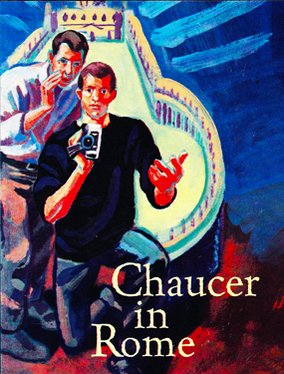
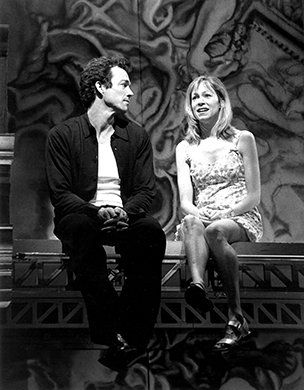
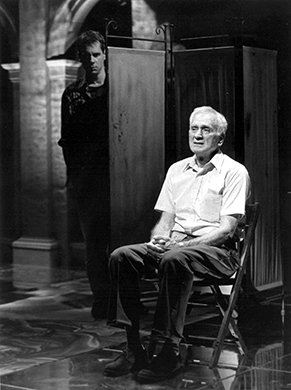
John Guare’s CHAUCER IN ROME, presented in the Newhouse in 2001, bears his trademark mix of absurdist humor, offbeat characters and thought-provoking drama. If the zany doings of The House of Blue Leaves were set in motion on the day the Pope came to New York in 1965, then Chaucer in Rome is, at least in part, about what happens when some New Yorkers come to see the Pope in 1999. It's 'Holy Year' and tens of thousands of Catholic pilgrims have descended on Vatican City –among them Dolo and Ron Shaughnessy from Sunnyside, Queens. You may remember Ron as a character from Blue Leaves—the rebellious young son who went AWOL from the Army. In this new play, he is now middle-aged with a son of his own named Pete, an art historian studying at the American Academy in Rome on a 2-year fellowship. Pete is not happy to see his parents – two of the reasons he fled America—but he's got more pressing concerns: Matt, his best friend at the Academy, has developed skin cancer from the toxic paints he uses. Pete struggles to convince Matt to find a new means of self-expression, and latches onto an idea after seeing the teeming masses of religious pilgrims around town: "The confessional! The last frontier. The place where art begins." Ultimately, what begins as an innocently playful idea creates profound changes in the lives of all of the play's main characters.
May 10 - July 29, 2001
